I’ve always claimed that I have proof the universe is full of intelligent life (according to our definition of intelligence), and it’s simply that we ARE the perfect example of intelligent life in our universe as there is literally nothing about our existential circumstances that’s special or unique and most of our planet’s complex life evolved within the last 600 million years. Now look at all we know about the universe from its largest parts (galaxies?) to the smallest (quantum particles?), there is not one thing in our universe that’s one of itself. Everything has billions, trillions, and beyond, of itself; even at the scale of a single galaxy.
This is a demo made to breath life into a mockup screenshot I found online. Don’t remember where I got the mockup from but I like the vibe :)
Demo is written using javascript/PhaserJS directly on the sadly-ruined-to-milk-for-money-by-amazon website Cloud9. I find it infuriating that rather than supporting the c9 platform and the growing community that used it for small projects, Amazon ate the service and now only allow using it through their hyper-complex-absurdly-massive AWS mess of enterprise stuff.
A while ago I used a simple benchmark to very roughly compare performance on multiple platforms: PC-6002 vs 80s Computers Benchmark and got some interesting results.
Recently I got a Raspberry Pi 4 and wanted to figure out how its new CPU compare to other platforms so I went back to that simple benchmark I used, scaled it up by 1000x and used it in many different ways on many different devices and platforms. I think the results are noteworthy :) but it’s still just for fun, this is by no means a benchmark that should be taken seriously.
Weather not being so nice through this weekend with an upcoming quick 2 weeks vacation where it’s summertime, I thought I’ll do a fun indoors thing on Saturday.
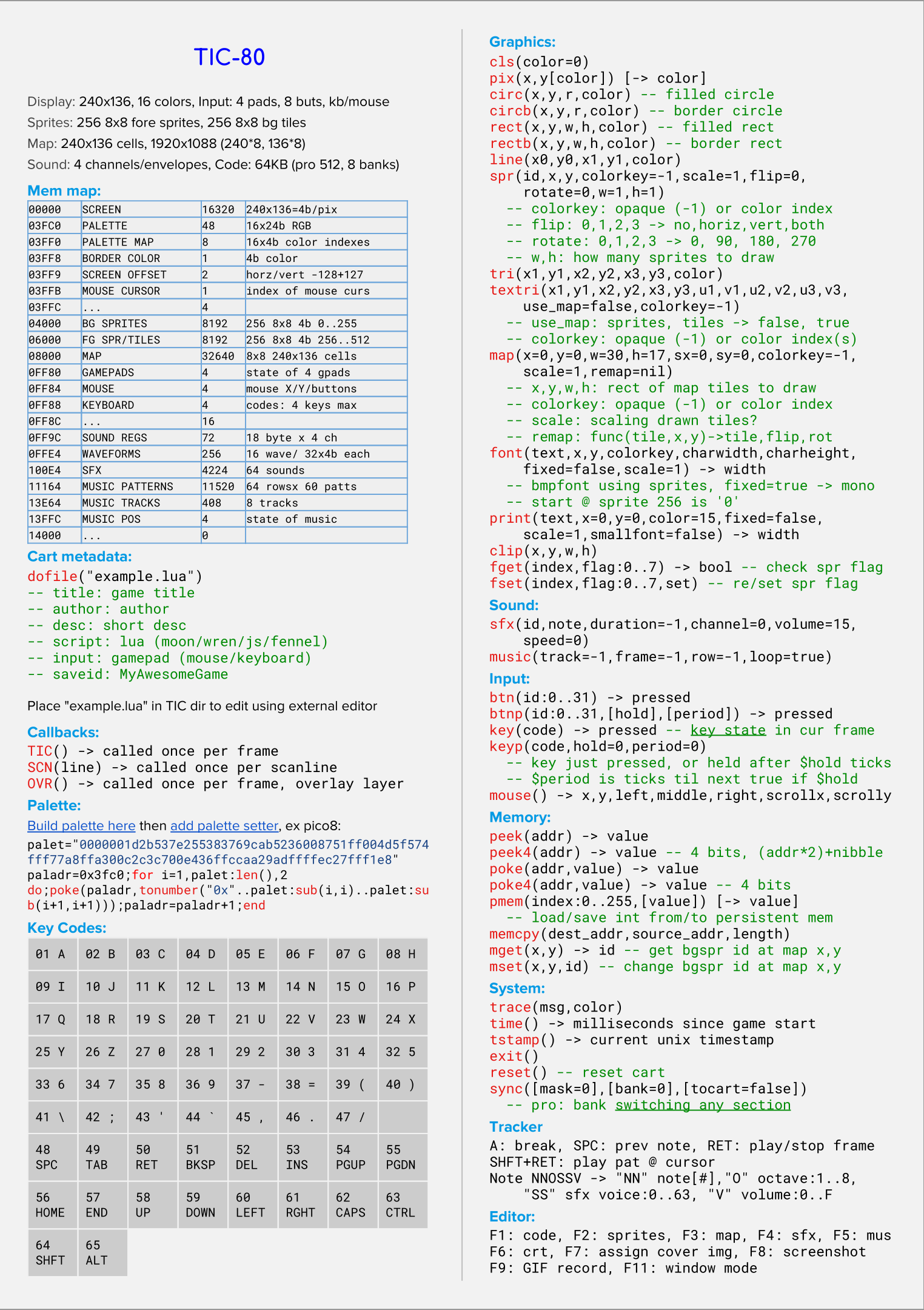
A while ago I set up TIC-80 on NVIDIA Shield TV and hooked up a bluetooth keyboard and mouse, the idea is to do some light gamedev directly on the TV while chilling on the couch. It’ll be like the most relaxed form of development possible :)
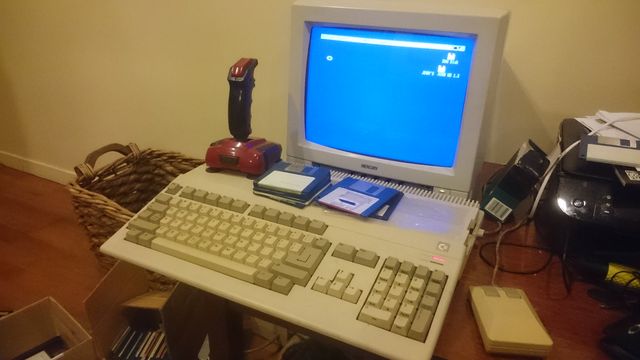
When I bought my Amiga A500 from TradeMe it came with a compatible monitor which had some old-monitor problems related to picture quality. I expected that as CRT monitors do tend to deteriote in quality over the years and also tend to die suddenly.
I was not proven wrong as the monitor did die a few weeks later with a click and a whine.
The Amiga A500 has a video-out port but puzzlingly it outputs in greyscale only.
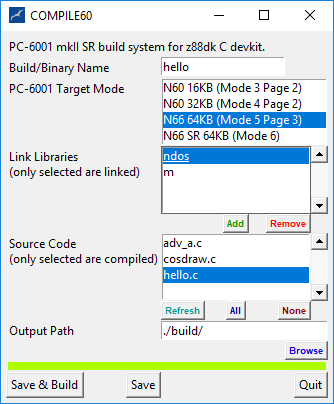
SPRITESR is a work-in-progress sprite library to automate drawing and animating sprites. SPRITESR is written to work specifically with N66 SR Mode 6 Screen 2 (Warka PC-6002, NEC PC6001 Mk2 SR, NEC PC-6601 SR, and NEC Mr PC).
I expected a troubled commercial history for the PC-60 due to the limited information about it, but I wanted to understand why and I’ve been researching the history of the PC-60 platform in Japan this last week.
My main source of information was the only related magazine I was able to find online in archive.org, IO Magazine. In every issue starting around page 200 there is an impressive amount of technical information about multiple platforms from that era as well as entire source code listings for software and games for these platforms.